We Need to Do Both
Reflections on leadership, encounter and the space between
Some tensions cannot simply be resolved. Sometimes we are asked “to do both”: to make choices and act within the tension, while remaining open to what we cannot determine. Encountering reality as it is gives us ground from which to move. And sometimes something emerges that we have not seen before.
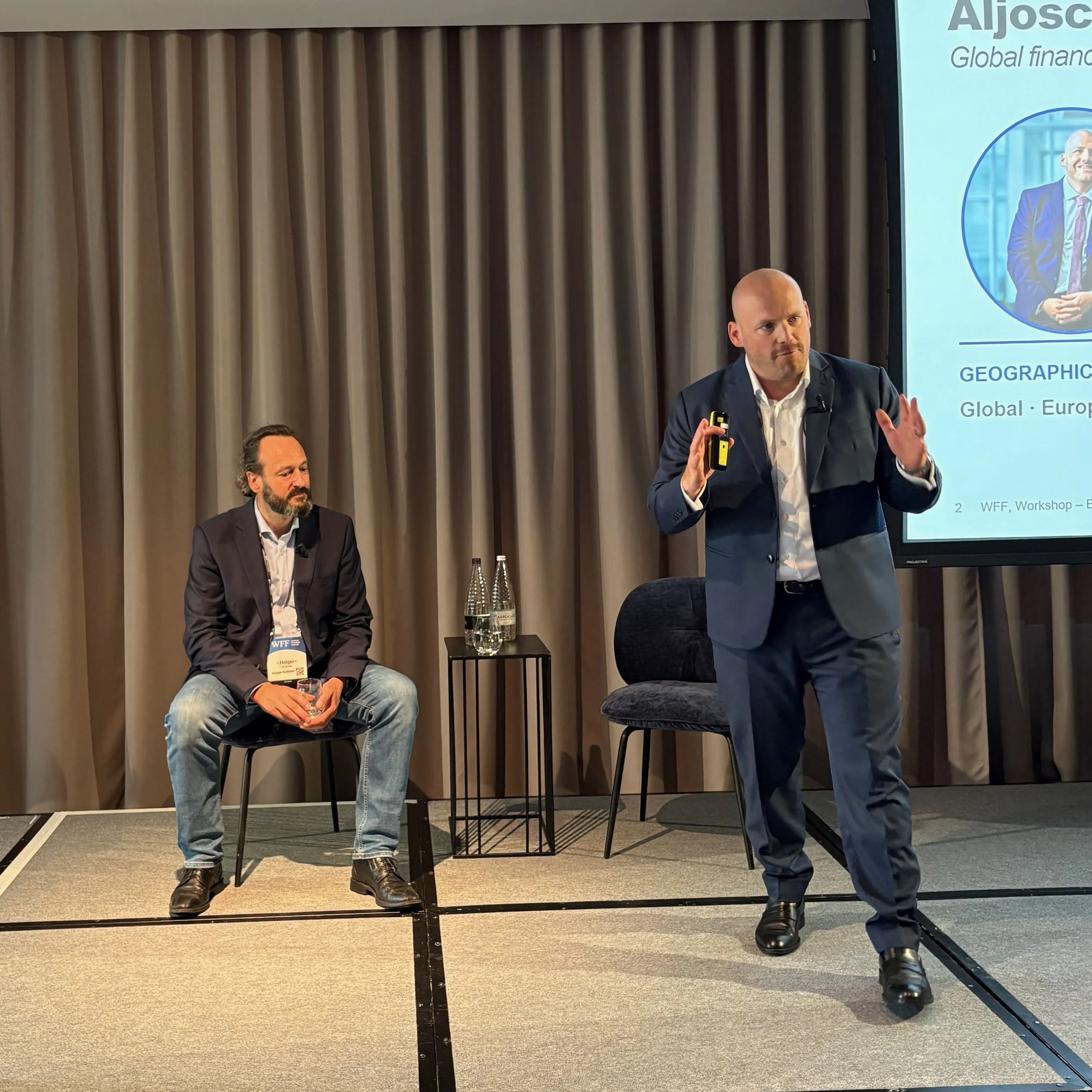
At the World Finance Forum, London · September 2026
Why Was This So Difficult?
I remember a conversation with my manager. I was responsible for our Finance technology organisation. We were investing heavily in cloud, data, AI and new digital capabilities.
The world around us was changing – much as it is today. Digital transformation was a strategic priority. At the same time, we were under significant pressure to reduce costs.
I was excited about the transformation. But I struggled with how this could go together with reducing costs. As we began to execute it, my manager’s response was remarkably simple:
“Holger, we need to do both.”
To me, this felt like trying to square the circle.
Looking back today, I know that my manager was right. Our technology organisation itself needed to transform. And reducing costs was part of it.
So why was this so difficult for me at that time?
Because I Was Looking for a Solution
That is how I had learned to approach problems. I studied physics and spent my early professional years in strategy consulting. Understand the problem. Make a choice. Solve the problem.
This way of thinking had served me well. And it still does. When two demands were pulling in opposite directions, I was trying to find a solution. Which one mattered more? Could we somehow do both?
So I was trying to resolve the tension.
But What If There Is Nothing to Resolve?
What if some things remain unresolvable, and for a reason?
When my manager told me that we needed to do both, I got that. And still, I struggled with it.
Reality turned out differently.
Some of our transformation efforts worked. Others did not. We had to fail, experiment and adjust. And I began to realise that transformation was not simply about adding new digital capabilities. We had to make choices about where to invest. And the technology organisation itself needed to change. We reduced our costs significantly. And continued to invest. Both were part of the reality we were facing.
Some time later, my Gestalt training helped me to understand this more deeply. I learned to stay with an experience as it is. To notice what I am experiencing while I experience it, without immediately analysing, judging or trying to change it.
And there is a paradox in this.
Encountering reality as it is gives us ground from which to move. We can act within the tension, while remaining open to what we cannot determine. And sometimes something emerges that we have not seen before.
Then my corporate role ended, and I was facing my own transition. During this time, my mother passed away. Experiencing the finitude of life made the question of my future even more existential. What really mattered to me? What felt right to do, even though I could not know where it would lead?
It was then that I decided to stop looking for another corporate role and started building my own practice as a coach.
So What Had Changed?
For some time, I had tried to resolve my transition by finding another corporate role. Losing my old role had left a gap. At the same time, much of what mattered to me was already there – working with people and transformation.
This changed the question I was asking myself:
Not only what I wanted to do next. But also what was already present. And what was it asking of me?
I had enough clarity to move. Today, I appreciate how different parts of my life and experience are beginning to come together: shaping change, supporting human growth and contemplative practice.
This decision did not remove the uncertainty. I had a fairly clear plan. But again, reality turned out differently. Some things did not work out as I had expected. Others emerged that I had not foreseen. And at times, I still struggle with where this will lead.
Something else that surprised me: I discovered humour. Not taking everything quite so seriously. Things do change. And sometimes it helps simply to smile at our own attempts to make everything perfect.
“Holger, we need to do both.”
When I remember the sentence, I have to smile. I have learned a lot from it, and from my manager. And I am still very grateful to him.
At the time, I heard a tension that needed to be resolved. Today, I hear an invitation to see reality as it is, act within the tension and remain open to what may emerge.
Perhaps this is where freedom lies.
Not in being able to determine what happens, but in how we respond to what we encounter.